
Product Selection
Planning Products for Community and Volunteer Programs
Organize community products by public distribution, volunteer needs and appreciation, then turn the plan into a clear procurement list.
Quick answer
Community and volunteer projects can involve several different procurement tasks. Public giveaways, volunteer identification and appreciation products should be planned separately, even when they belong to the same program. A clear list helps show which items are essential, who receives them and what needs to be confirmed before an exact quotation is possible.
What this covers
This guide covers grouping a community or volunteer programme's product needs, recording quantities and practical requirements, keeping the message readable and arranging packing, then turning the plan into a brief to send.
Community and volunteer projects can involve several different procurement tasks. Public giveaways, volunteer identification and appreciation products should be planned separately, even when they belong to the same program.
A clear list helps show which items are essential, who receives them and what needs to be confirmed before an exact quotation is possible.
1. Start with three practical groups
| Group | What the products need to support |
|---|---|
| Public distribution | The campaign message and planned handout activity |
| Volunteer needs | Identification, coordination or the actual work described in the brief |
| Appreciation | A thank-you to volunteers, donors or supporters |
These groups organize the brief; they are not a requirement to buy three sets. One program may need only identification items, while another may include several product types.
2. Distinguish recipient numbers from product quantities
Record quantities by item and recipient group. If a volunteer receives both a cap and a lanyard, those are separate product lines even when the recipient count is the same.
If quantities are still being discussed, provide the options you want quoted. A product’s usual MOQ helps with shortlisting, but an inquiry below that quantity can still be submitted for review.
3. Explain practical requirements
For a bag, describe the intended contents and dimensions. For identification items, confirm the card size, wording and attachment requirements. For a product used during an activity, explain the conditions and any specific performance requirements.
Do not substitute a broad term such as “community use” for a specification. A campaign label does not prove that an item is appropriate for a particular task.
4. Keep the message readable
Provide the approved logo and wording. Decide which information belongs on the product and which belongs on a separate insert. Small decoration areas may not suit long messages or detailed artwork.
Ask for a layout review before assuming all supplied content can be reproduced at the intended size.
5. Arrange packing around distribution
State whether products should be grouped by team, location or handout session. If cartons need specific labels, supply the required references.
For multiple locations, provide quantities by destination and target receipt dates. Review any different packing or delivery requirements before the order is finalized.
A concise brief to send
- Program description and recipient groups.
- Product quantities and references.
- Required specifications and approved message.
- Optional items and acceptable alternatives.
- Packing groups, destination and target receipt date.
Frequently asked questions
Can you recommend products if we only know the task and budget? Send the intended recipients, quantity and requirements. Those details help guide suitable options.
Does an appreciation gift need custom gift packaging? No. Standard packing may be sufficient. Additional packing is discussed when it serves the project.
Products this guide points at
Canvas Tote Bag 12oz
SKU BG-1201
- MOQ
- 100 units
- Production
- 20–30 business days
US$3.84 / unit
at 2,500 pcs · Shipping not included
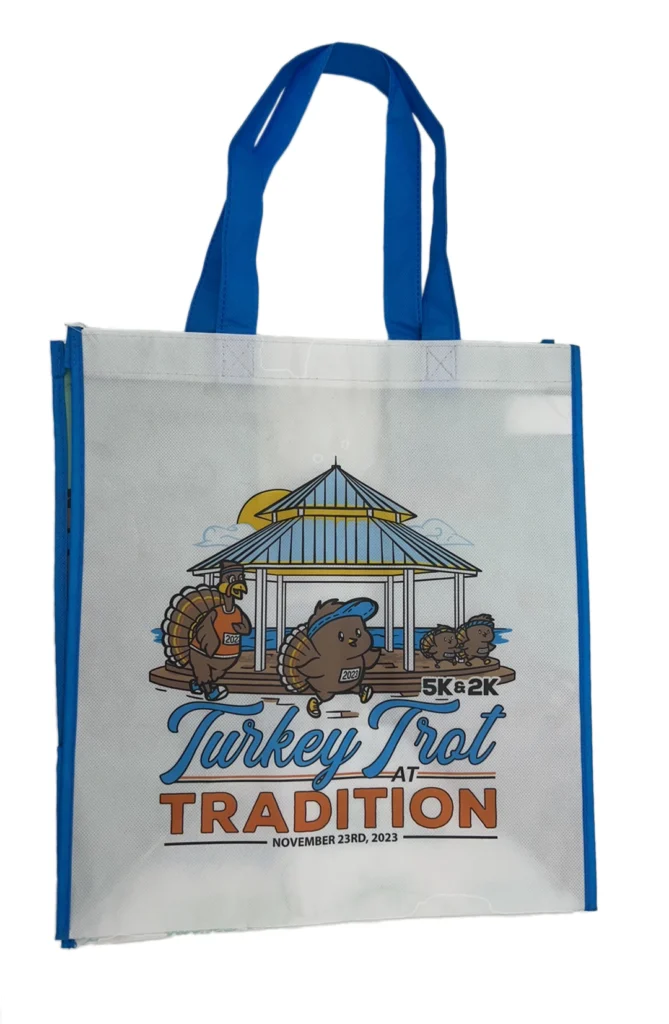
105GSM Laminated Tote Bag
SKU AT-BAG-08
- MOQ
- 100 units
- Production
- 12–15 business days
US$0.63 / unit
at 5,000 pcs · Shipping not included
Send a spreadsheet, PDF, images or a written brief. We can help identify product options and clarify the information needed for a quotation.
Request community or volunteer product suggestions All buying guides