Photographic artwork
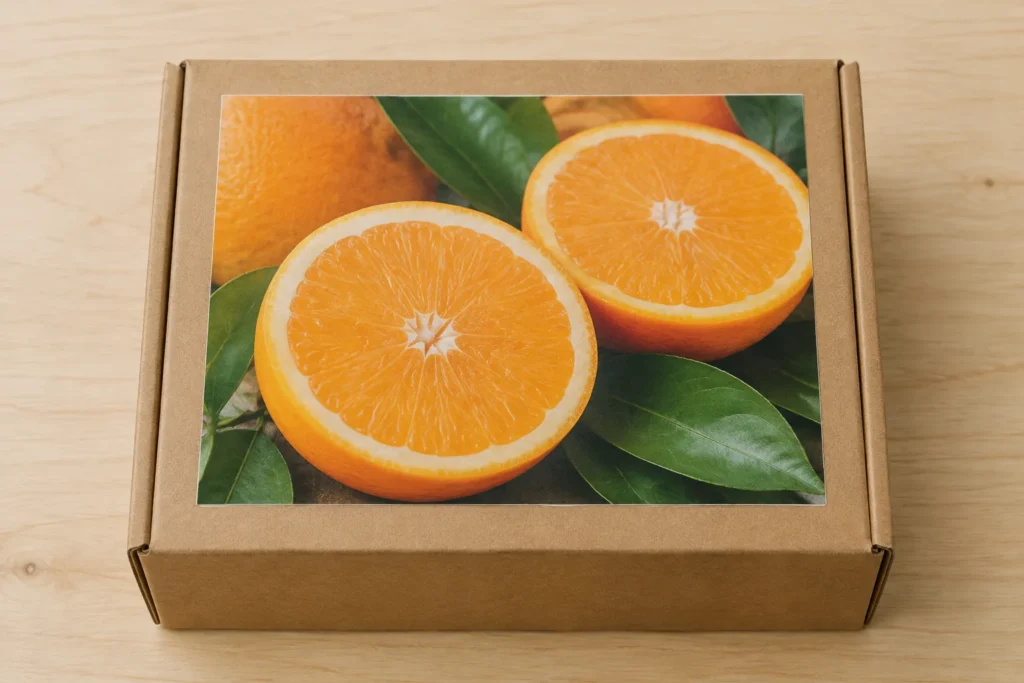
A photograph printed as continuous tone: shading and gradients run as one image instead of being flattened into a few solid spot colors.
Decoration method
Full-color printing reproduces photographs, gradients and multicolor artwork. We select the production method around your product, surface and required finish.
Full color is an output approach, not a single machine. We review the file and the target colors, choose the print route the product and its surface can actually take — paper or board printing, UV printing on a rigid item and similar routes are not interchangeable — then sample and check the result before the batch runs. Color matching follows the route that is used and the material it lands on, so the same file can read differently on coated paper, uncoated board, film or metal.
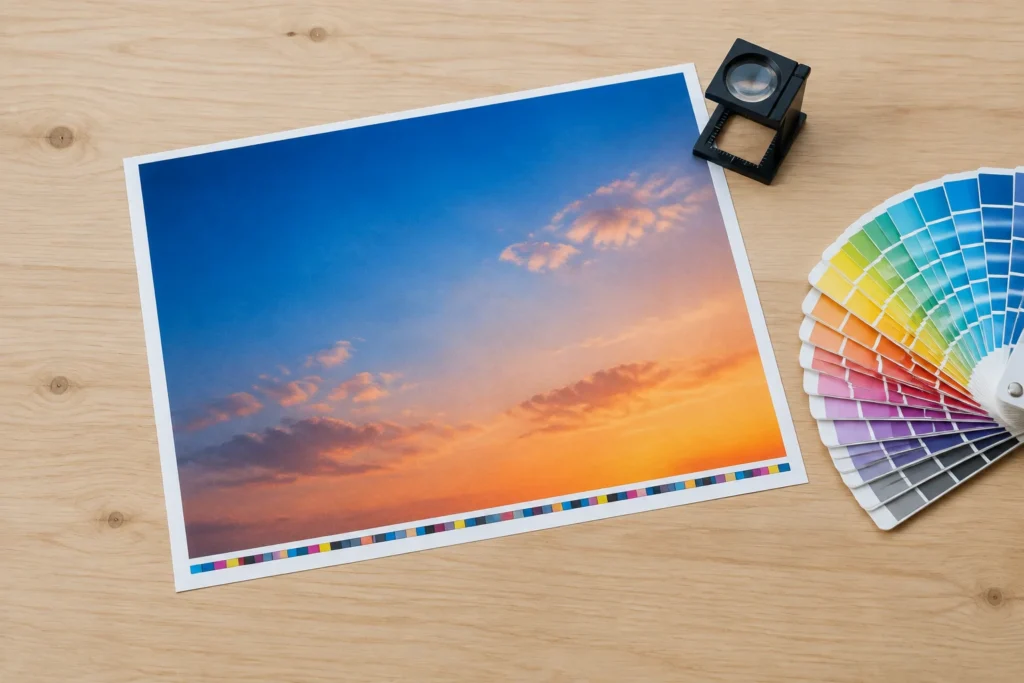
A photograph printed as continuous tone: shading and gradients run as one image instead of being flattened into a few solid spot colors.
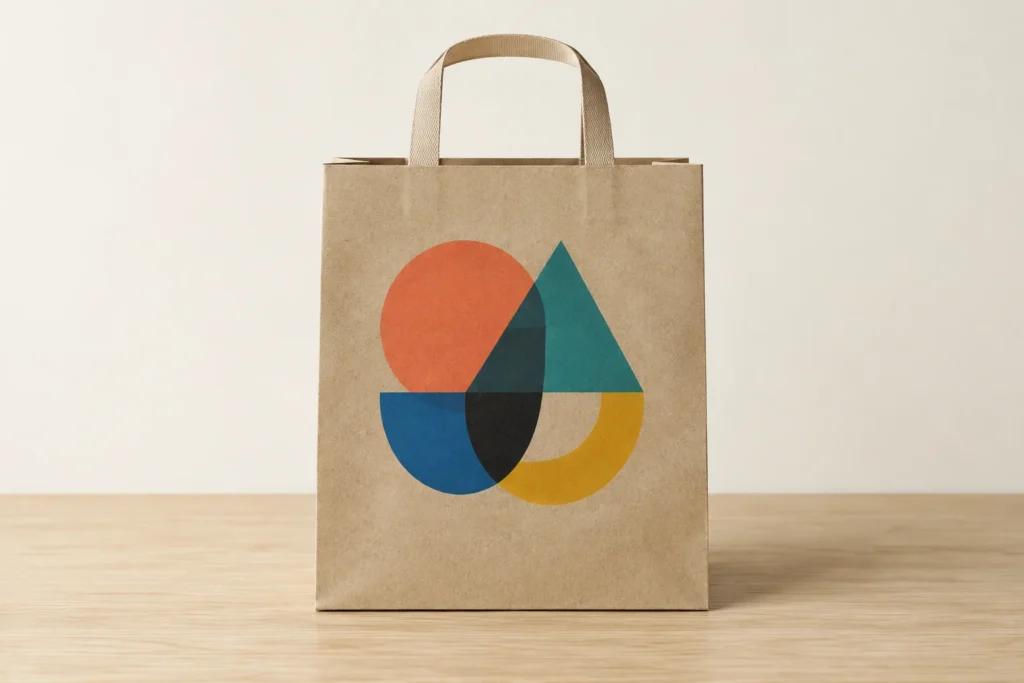
A complicated multicolor brand mark printed on the route actually chosen for the product, so several colors come through without one screen per color.
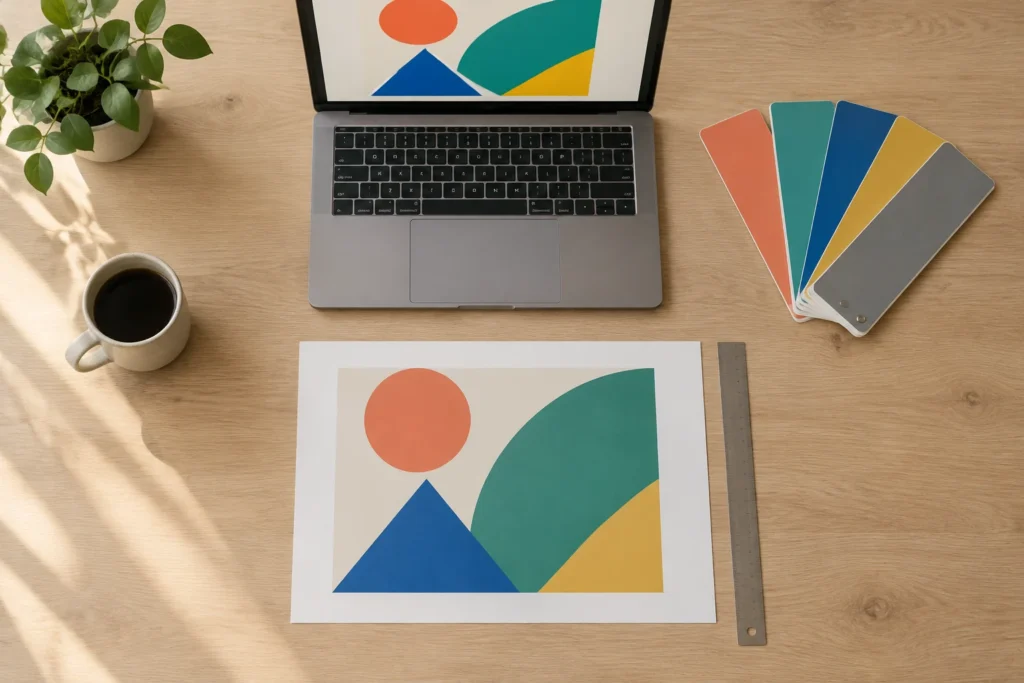
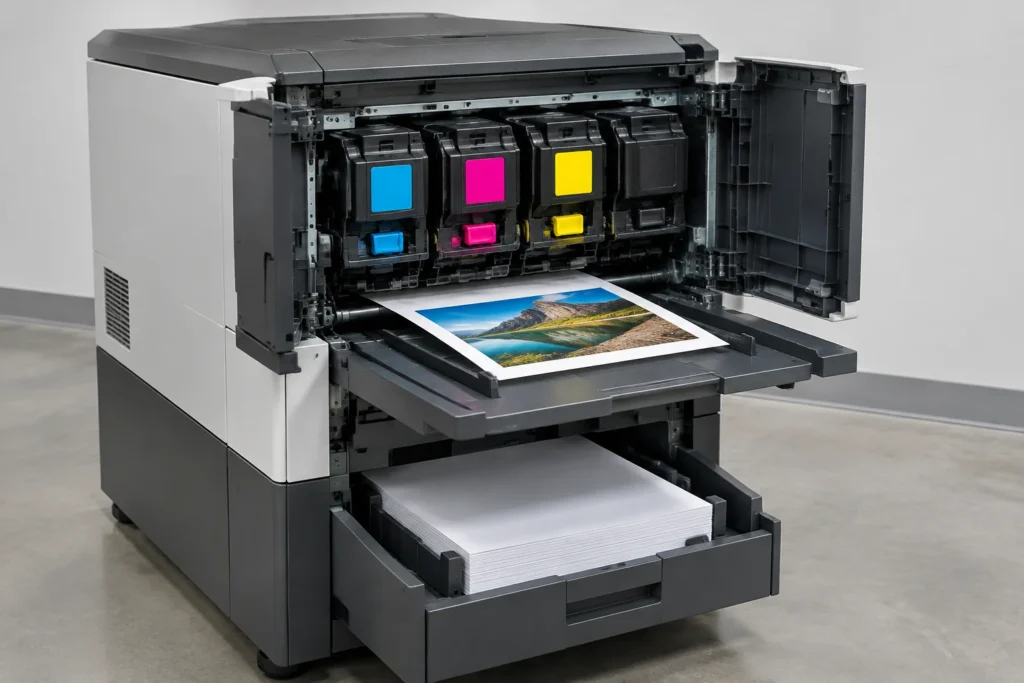
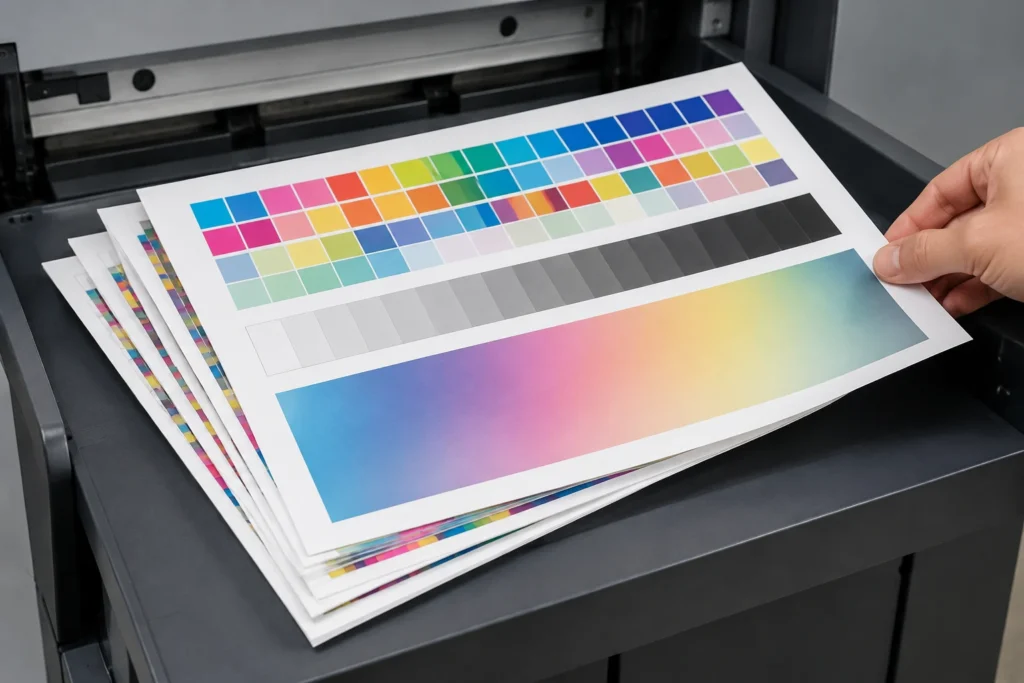
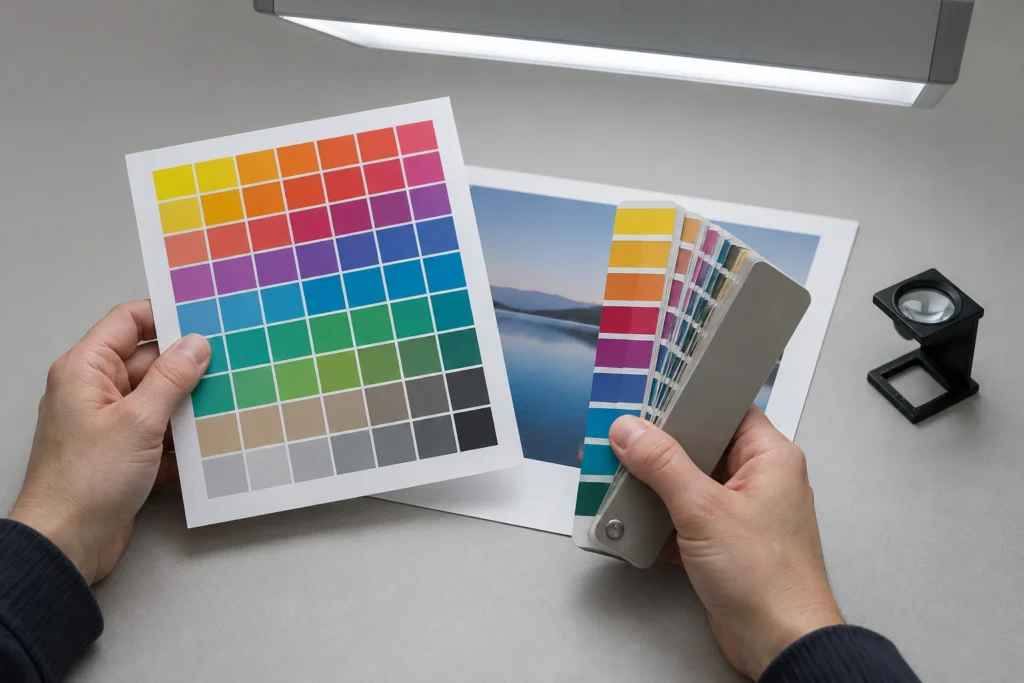
Surface suitability Full color fits flat printed surfaces — cards, inserts, labels, stickers and packaging — where continuous tone and many colors have to come through, because the route can be matched to the stock instead of squeezing the design into a few spot colors.
We cannot promise that a printed piece will match a Pantone reference or the color you see on screen; the result is confirmed against the sample produced with the actual route and material.
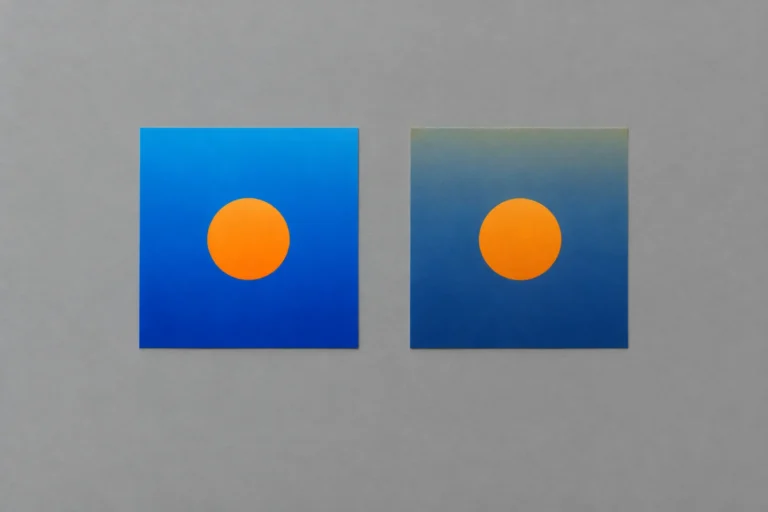
Possible issue The printed color comes out duller, warmer or lighter than the artwork, usually because the file was built for screen, the stock carries its own tint, or the route renders process color differently.
What to check Check the color build in the file, the base color of the stock and the exact production route before the sample is approved.
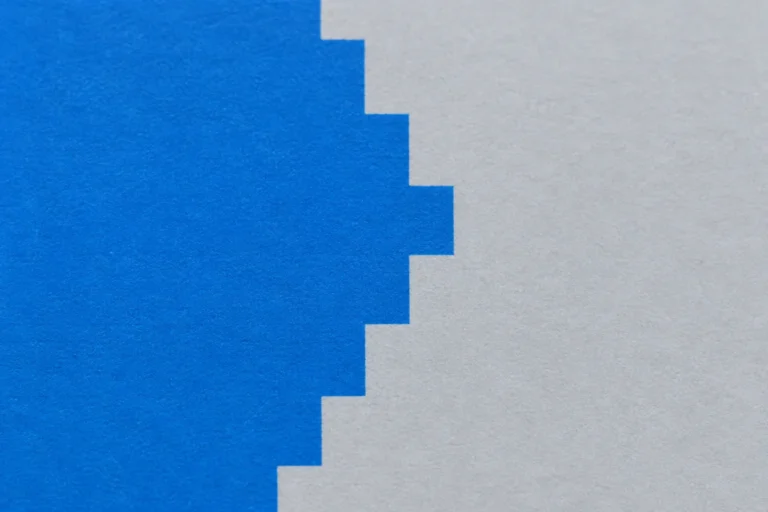
Possible issue A photo looks sharp on screen and soft on the printed piece because the file does not carry enough resolution for the size it is printed at.
What to check Check resolution at the final output size rather than screen size, and confirm the print size on the item.
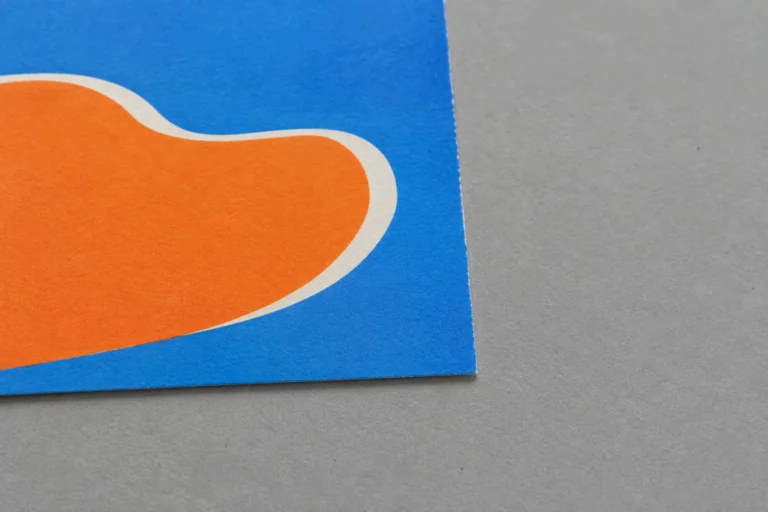
Possible issue Artwork near the edge gets cut into, or a second pass lands slightly off, when bleed, trim line and position were not defined in the file.
What to check Check bleed, trim line and position against the dieline or the item's printable area before production.
Before production we confirm the artwork with you in writing: the file version, the print size and position on the item, the material and the print route, the color references, the quantity and the finish. Production starts from that written confirmation, so a change made after it is confirmed may need a new sample and a new quotation.
A digital proof shows layout, size and placement only; it does not show real texture, print density, adhesion or wash behaviour, so it is not a physical sample.
Pricing and order policies
Setup fees and per-item printing charges are listed separately in your quote.
| Print option | Setup fee | Per-item printing |
|---|---|---|
| Full-color printing | $35–$50. One-time per order; $35 per logo is also recorded. It is not charged again on top of the setup of the print method you select. | Quoted per project — product, print area, material and quantity; no single base rate is published. |
| Each additional position | — | Quoted separately; each extra position is priced on its own, and the production route used is named in the quote. |
*Check the product quote for included decoration. Additional-position pricing depends on the product and print area.
| What to compare | CMYK (Full-Color) | Spot Color Screen Printing |
|---|---|---|
| Artwork it suits | Photographs, gradients and multicolor artwork print as one continuous image, without a screen per color. | Solid shapes and a limited number of spot colors, where each color is its own screen and its own pass. |
| Product surface | Matched to the product: paper, board, film and similar flat printed surfaces, with the route chosen per item. | Flat and curved items, including bottles and tubes, where a screen can follow the surface. |
| What drives the quote | The production route, the print area, the material and the quantity; no single base rate is published. | The number of colors, the number of positions and the quantity, plus a screen charge per color. |
| Confirm before ordering | That the chosen route suits the material, and how close the color can come to your reference on that stock. | That the artwork separates into the planned spot colors, and how those inks read on the item's surface. |
The two columns describe what each process can hold on a surface, not a comparison of finished quality. Send the artwork and the item, and the recommendation comes with the reason for it.
No product in the catalogue is filed under this method yet. We can still print it on an item we source for you.
Whichever method you print with, these services carry it through: Logo Printing & Product Customization, Sampling & Approval, Production Monitoring & Quality Checks.
No. Full color describes the result — photographs, gradients and multicolor artwork — and the actual route is chosen for your product, its surface and finish. That route is what the quotation and the sample refer to.
No. Color matching has to be assessed for the actual route and material and approved on the sample. Tight reference targets, and colors that fall outside what process color reaches, are discussed before production.
A screen printing per-color plate formula does not apply here. Cost depends on the route that is used, the print area, the material and the quantity.
Yes — continuous tone is the reason to choose this option. Supply a clear file at the intended print size; 300 dpi is a useful target for raster images, and there is no dpi threshold for vector artwork.
100 pieces is the starting point for this decoration on a suitable product. Confirm the figure on your quotation, because the product and the route can move it.
New customers generally pay a sample-making fee of $50–$100 in addition to any applicable setup or tooling fee; existing customers generally do not pay a sample-making fee. We cover the sample product and its shipping. The sample-making fee is refunded at final balance settlement when the bulk order is essentially unchanged from the approved sample in product, material, artwork and finish, while setup and tooling fees are non-refundable.
Longer reads about this method: How to Choose a Tote Bag Material.
A logo and the item is enough to start. If this method will not hold your artwork on that surface, we say so before you order rather than after the deposit.